Arts & Culture

We make brands and digital spaces for museums, memorials and cultural institutions that build identification, open a view, and make access. Together we find the story that holds institution, content and public, and we give it a form.

We make brands and digital spaces for museums, memorials and cultural institutions that build identification, open a view, and make access. Together we find the story that holds institution, content and public, and we give it a form.

Challenges

Very different topics, each with its own history. Audiences from specialists to school classes, and a growing expectation of formats. Cultural institutions sit in a particular tension. They're expected to show a stance in public debate, open new views, and make content accessible.

Too much to show. Too little visibility.

There's often more to show than ever becomes visible. Content, collections, stories that barely reach anyone. We make visibility that still honours the depth.

New formats. The same stance.

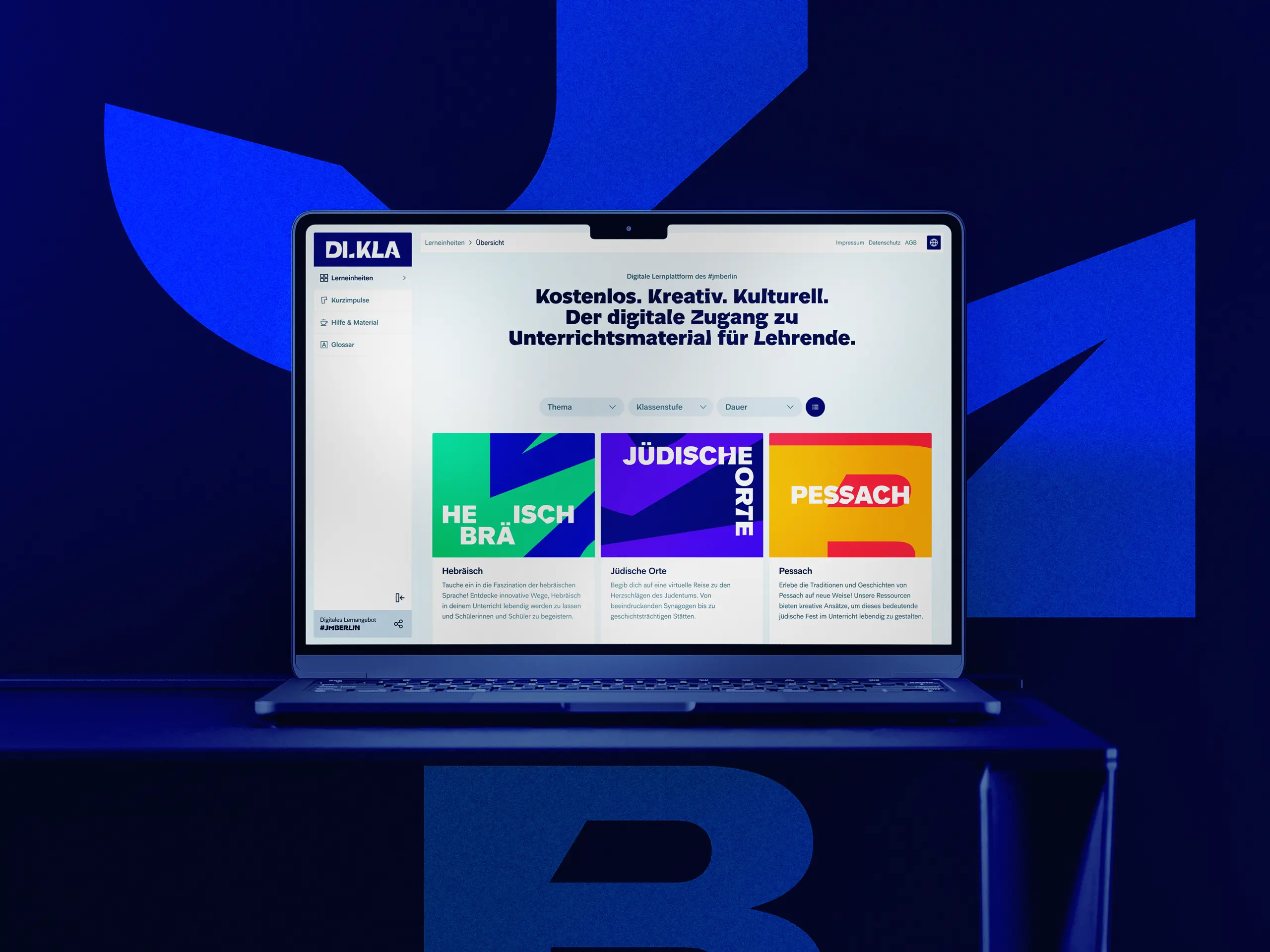
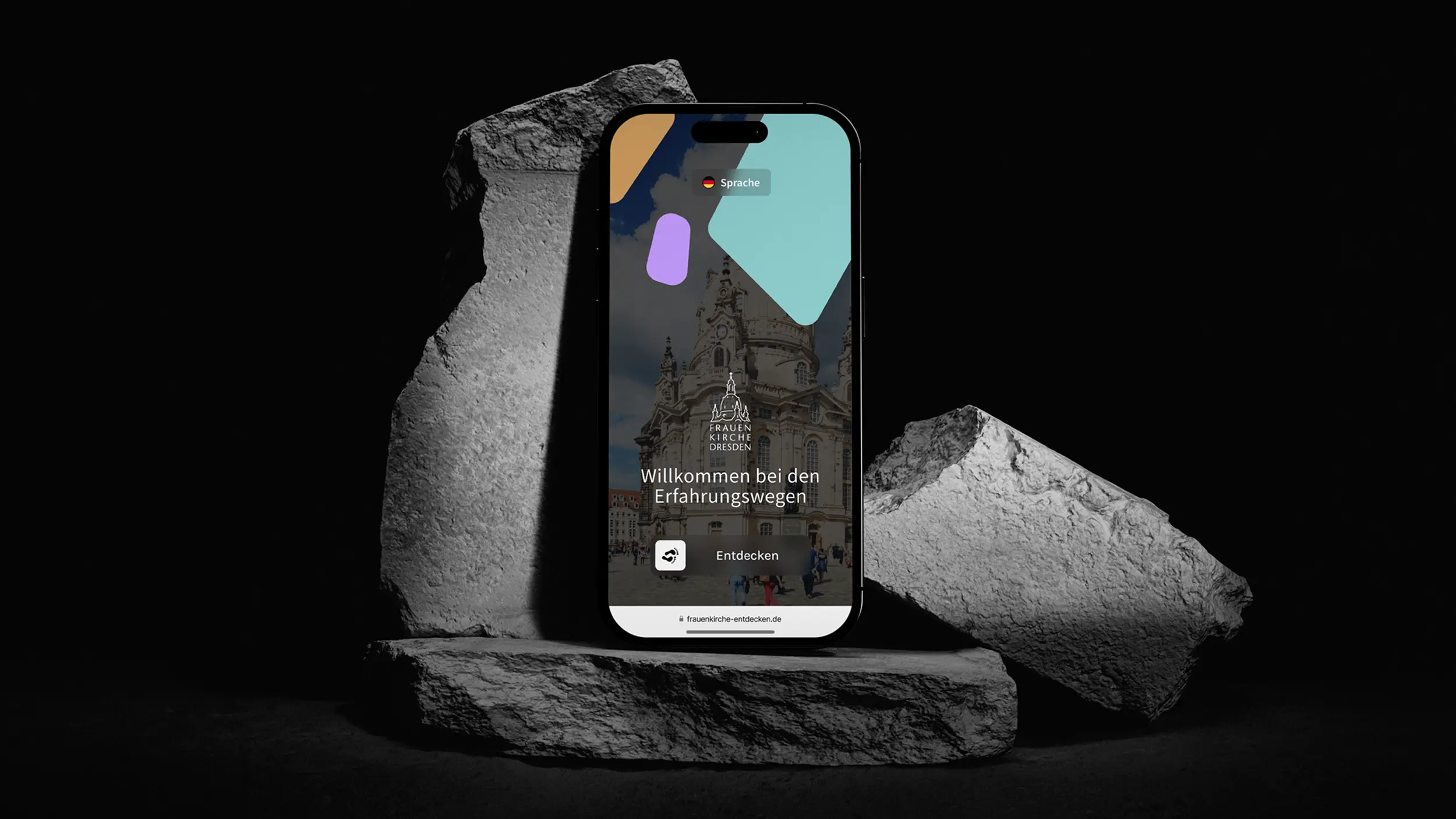
To reach new audiences, many houses turn to interactive, digital visitor experiences. We make applications that carry the content, and fit the brand and what it stands for.

Many audiences. One identity.

Specialists, school classes, visitors, funders. Few brands speak to so many people at once. We make identities that stay consistent in the stretch between seriousness and access.

Many channels. Thin resources.

Cultural institutions run many channels, often without a standing design team. The result: inconsistency that costs trust. We make brand systems that apply simply and consistently across channels.

Our process

What's the context? At the start of every process is the engagement with you, your vision and your world. With that vision in sight we set our focus and begin to find answers, based on an idea, to the challenges of your project. As individual as you are.

How we work together

Communication is only good if it's understood. That also holds for the tools of how we work together. As a client you get access to your own dashboard. Chat, mail, calendar, files, links. All of it in one place, so we're always one click away.

Project management

Direct exchange

Files & links

Kanban board

Backlog

You can add new tasks and requests to the backlog yourself, any time. So we can react with as much agility as possible to what we learn, and to changes in the project.

Archive

Done

Project management

Direct exchange

Files & links

Kanban board

Backlog

You can add new tasks and requests to the backlog yourself, any time. So we can react with as much agility as possible to what we learn, and to changes in the project.

Archive

Done

Project management

Direct exchange

Files & links

Kanban board

Backlog

You can add new tasks and requests to the backlog yourself, any time. So we can react with as much agility as possible to what we learn, and to changes in the project.

Archive

Done

Common questions

What makes a brand for cultural institutions different than for companies?

Many cultural institutions feel that classic brand rules don't apply to them, and that's partly true. A company brand follows revenue. Yours follows your brief. You don't sell a product. You stand for a stance, a collection, a civic role. Your brand value doesn't only come from conversion. It comes from trust, and that trust has to hold across leadership changes, decades, funding phases. What makes it harder: you don't only compete with other museums or theatres. You compete with Netflix, with social, with everything fighting for the attention of people who might visit. Your brand therefore needs the same emotional pull as commercial brands. Only the means are different: stance and substance, not an ad budget. That's why we never start with the look. We start, with you, with what your institution actually stands for. Only then does design get a direction.

When is the right moment for a rebrand?

When something in the house changes. A new leadership team, building work, a strategic reset, a round anniversary. It's natural to ask whether the appearance has to come along. It gets harder when a rebrand is discussed internally as an end in itself, without clarity on what actually changed strategically, and why this is happening. We go through a different question first: has your work, your public or your surroundings fundamentally changed, and does your current identity still show that? If you're unsure, that's the right starting point for a first conversation, no strings.

How do you speak to specialists and a wider public at the same time?

The pressure to please everyone sits on many institutions. The honest answer takes some of that off: you don't do it at the same time, and not with a single tone. Take yourself as an example. You stay the same person, and you change the colour of your voice depending on who you're speaking with, and in which situation. A brand can have a shared core. Values, visual system, stance. And still sound different in different contexts. We often see how this stretch wears institutions down, until they land in a middle that speaks to no one. Stakeholders find it too playful. Younger audiences find it too stiff. The answer isn't in a single text. It's in the structure behind it. Once it's clear which channel is for whom, the right tone for each becomes clear, and you no longer have to choose between groups.

What sets a good digital application apart from a poor one?

The worry of ending up with an expensive, barely used tool is fair, and it usually gets decided at the very start. A good app has a content decision behind it. It isn't built to show technology. It's built because there is content you can't fully take in physically, for example. And it knows exactly what it adds that a walk through the house cannot. Concretely: clear navigation, offline availability, content that deepens rather than repeats, and a visual appearance that fits the overall identity of your institution. Bad apps almost always come from the same causes. Unclear aim, no link to the content strategy, nobody in charge after launch. That can be avoided from the start. Think of an app as a publication with its own argument, its own dramaturgy, its own purpose. Then you don't get a tool that disappears after three updates.

At what point is an app of your own worth it?

Before anyone talks about content, the budget question almost always comes first. For a cultural institution, ROI is the wrong question. Your app doesn't have to pay for itself like a shop, any more than a flyer or your website does. It justifies itself through the use for your mediation aim. An app is worth it when your content should travel beyond the house, in space or in time, when an existing audioguide no longer covers what you need, or when funding asks for a digital mediation component. A calming side effect: in funded projects, apps can often be realised cost-neutral. The real question then isn't budget. It's the concept. We clarify this with you: what can the app do that the audioguide can't? Once that's answered, whether it's worth it answers itself.

How do you make sure the new corporate design is applied consistently in-house?

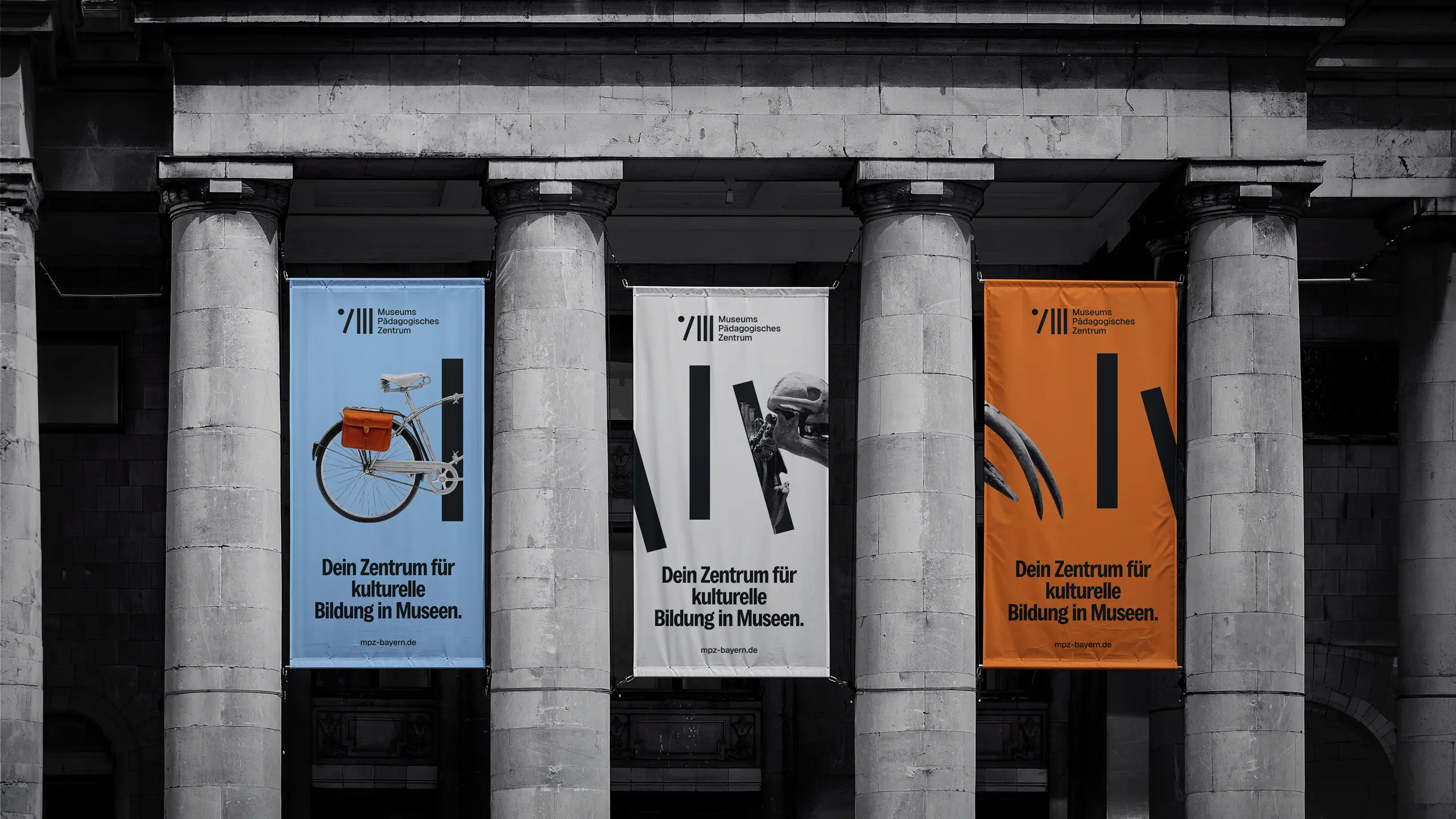
A new CD gets made, everyone is excited, and a year later every department looks different again. Sound familiar? It rarely comes from a lack of will. It comes from the solution itself. A CD manual that sits in a folder and gets updated once a year can't hold that consistency. What does work: design systems. Documented, modular components, shaped so the easy path is automatically the consistent one. At MPZ Munich we did exactly that. A CD manual that explains logo, colour and type so external partners and internal teams without design training can work with it safely. Not a rigid rulebook. A toolbox anyone can use. And something that's often underestimated: internal acceptance comes from involvement, not from instruction. Who was in the process from the start will carry the result later.

Not enough? Ask your AI about us

Let's find out if we're a fit.

Let’s get to know each other and see whether we’re the right fit for your project. From there, we can shape a solution around what you actually need.

Thursday, August 27, 2026

1

2

3

4

5

6

7

8

9

10

11

12

13

14

15

16

17

18

19

20

21

22

23

24

25

26

27

28

29

30

31

10:30

11:30

14:30

15:30

16:30

17:30

Let's find out if we're a fit.

Let’s get to know each other and see whether we’re the right fit for your project. From there, we can shape a solution around what you actually need.

Thursday, August 27, 2026

1

2

3

4

5

6

7

8

9

10

11

12

13

14

15

16

17

18

19

20

21

22

23

24

25

26

27

28

29

30

31

10:30

11:30

14:30

15:30

16:30

17:30